
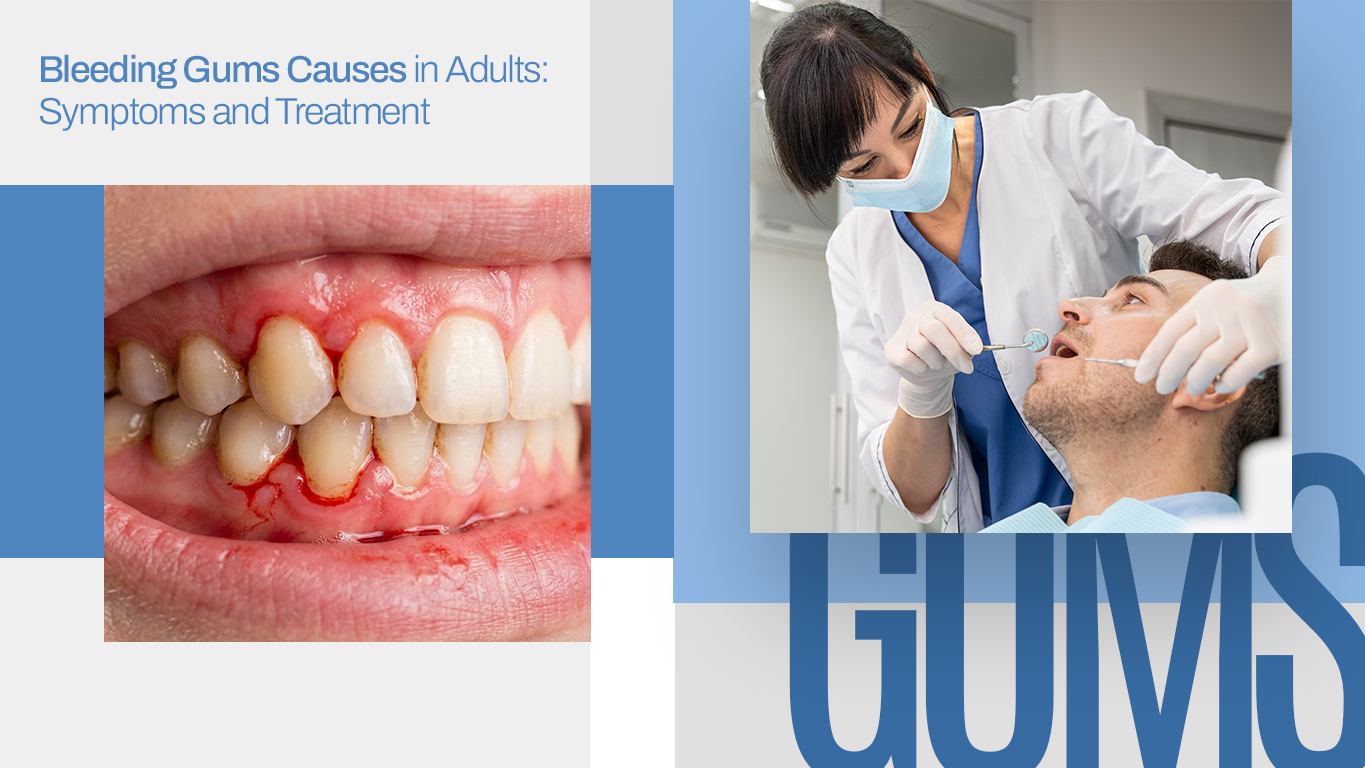
Bleeding Gums Causes in Adults: Symptoms and Treatment
It can be frightening when you notice the presence of blood in the sink after brushing your teeth. However, this problem is not as unusual as one would think. Understanding bleeding gums causes is the beginning of safeguarding your oral health before minor issues become serious dental problems.
What Causes Bleeding Gums?
So, what causes bleeding gums in adults? It is hardly ever a single factor. Bleeding gums are in most instances an indicator that your gum tissue is swollen, aggravated or contaminated. The most frequent offenders are:
1. Gingivitis and Gum Disease
Gingivitis is the initial stage of gum disease and is the major cause of bleeding gums. It arises when the amount of accumulation of plaque along the gumline causes inflammation. In case of no treatment, the gingivitis will develop periodontitis, a more dangerous infection that may destroy the bone under your teeth.
2. Causes of Bleeding Gums When Brushing
Bleeding is especially observed by many adults during their oral hygiene procedure. The reasons why gums bleed during brushing usually include:
- Excessive brushing, abrasiveness, or pressure – Scrubbing soft gum tissue or using hard bristles is not recommended.
- Poor brushing habit – Lapses in the routine will enable the plaque to harden into tartar aggravating the gums.
- New flossing habits – Flossing after taking a break often results in temporary bleeding which is easy to overcome within a week.
3. Does Alcohol Cause Bleeding Gums?
The answer is yes, and it can do so greatly. Alcohol dehydrates the mouth and diminishes the amount of saliva. Saliva being the natural defence mechanism of your mouth against bacteria, a dry mouth place will enable harmful bacteria to multiply resulting to gum inflammation and bleeding. The excessive use of alcohol is also linked to nutritional deficiency – especially Vitamin C and Vitamin K – which are the necessary nutrients to keep gum tissue healthy and blood to clot adequately.
4. Nutritional Deficiencies
Deficiency in necessary vitamins has a direct consequence of undermining the health of the gum. The lack of vitamin C, especially, is associated with a condition known as the scurvy that results in swollen bleeding gums. Lack of the vitamin K also decreases the ability of the blood to clot, so slight irritation of the gum will lead to excessive bleeding.
5. Hormonal Changes
Menstruation, pregnancy, and menopause create a change in hormones that leads to the increase in the blood flow over gum tissue making it more sensitive and subject to bleeding. This is what is usually known as pregnancy gingivitis.
6. Certain Medications
Aspirin and warfarin are blood-thinning drugs that lower the clotting of your blood, which then causes it to bleed easily in your gums. You should always remember to inform your dentist of the medications you are taking at the time.
Can Bleeding Gums Cause Bad Breath?
Can bleeding gums cause bad breath? Absolutely. Bleeding of the gums is a common indicator that may be associated with the existence of bacteria-carrying plaque or infection. Sulfur compounds are released by these bacteria causing a lingering, bad smell. When you have chronic bad breath in combination with bleeding gums, then chances are that gum disease is the cause of the two symptoms.
Causes of Bleeding Gums and Treatment
Understanding causes of bleeding gums and treatment alternatives is complimentary. Here is what you can do:
- Get better at brushing your teeth – Soft-bristled toothbrush, circular motions.
- Flossing every day – Regular flossing will get plaque between teeth, which brushes will not reach.
- Use antiseptic mouthwash- This helps in reducing bacteria and helps to ease the inflamed gum tissue.
- See your dentist – Professional scaling and cleaning removes the hardened tartar which cannot be removed by home care.
- Dietary choices – Consume more Vitamin C and K in fruits, leafy greens, and vegetables.
- Limit alcohol intake – Minimising the alcohol intake helps to regain the saliva production and gum protection.
- Keep hydrated – Drinking lots of water keeps the mouth moist and the bacteria away.
Bottom Line
Occasional bleeding which stops with improved hygiene is not usually an alarming factor. Nevertheless, in case of frequent bleeding of gums, swelling, gum recession, tooth sensitivity accompanied by bad breath, consult a professional dentist as soon as possible. When gum disease is treated early enough, it can be prevented and your teeth will last you a lifetime.