
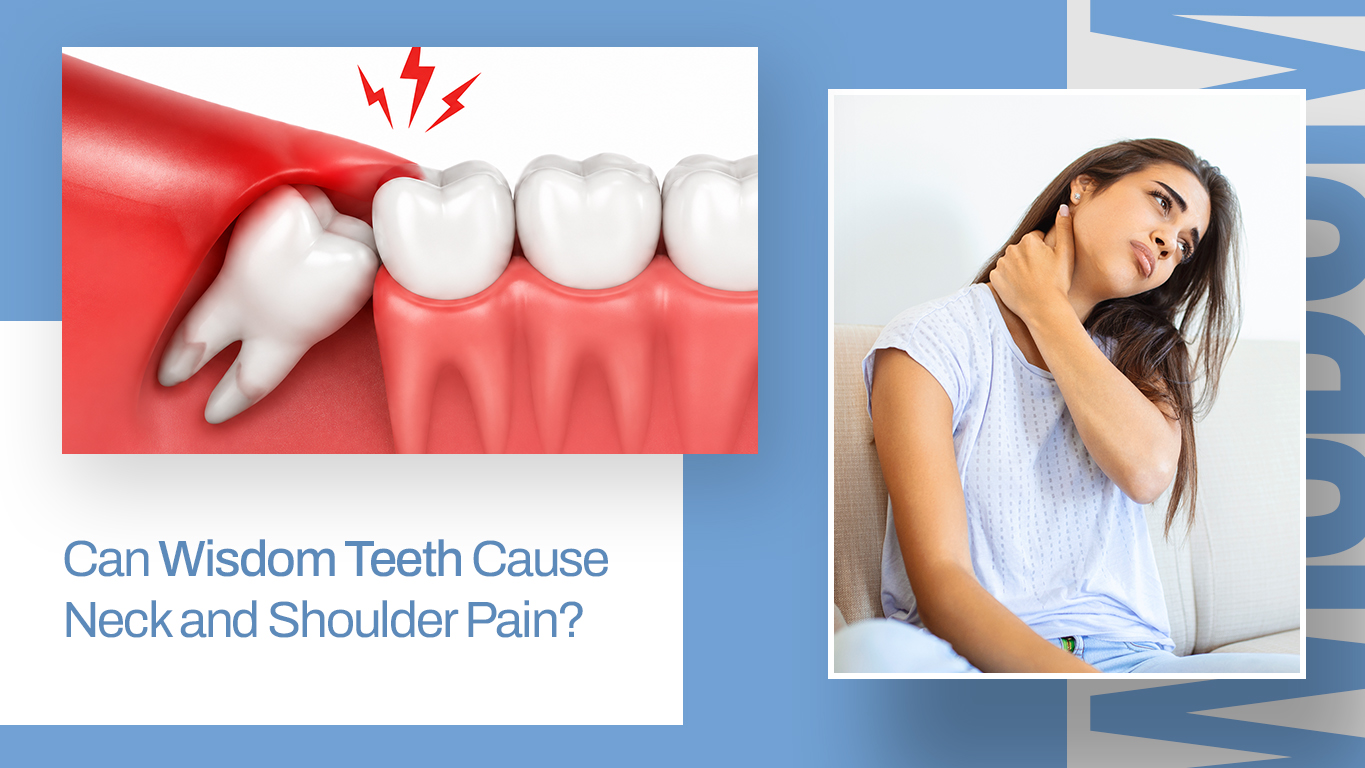
Can Wisdom Teeth Cause Neck and Shoulder Pain?
Most people would expect that wisdom teeth pain would remain at the back of the mouth. However, if you’ve been dealing with a stiff neck, tight shoulders or a dull ache that runs from your jaw down, you may be having more problems with your wisdom teeth than you realize.
Can wisdom teeth cause neck and shoulder pain? Yes — and it’s one of the most underutilised links in the dental health chain! If wisdom teeth are impacted, infected or inflamed, they don’t only irritate your gums. They set off a domino effect along the nerves and muscles of your jaw, head and neck which may manifest as tension, stiffness and radiating discomfort far outside the mouth.
The first step to a proper diagnosis – and treatment – is understanding the relationship between wisdom teeth pain causes and general body symptoms.
What Are Wisdom Teeth and Why Do They Cause Problems?
Wisdom teeth are your third molars, which are the very last teeth to grow in, usually between the ages of 17-25. They are not always able to erupt properly, causing them to become impacted, since the jaws of modern humans are not always large enough to accommodate them. They can be slanted or only be partially visible above the gum line, or they can come in contact with adjacent teeth.
This causes the tissues around the tooth to become inflamed, infection may occur and the surrounding jaw muscles become tense. This localized stress is not likely to remain localized for long.
Can Wisdom Teeth Cause Neck and Shoulder Pain?
Yes, it does happen — and more frequently than you probably think. Do wisdom teeth give neck and shoulder pain? Absolutely. This is a phenomenon well documented as referred pain.
Referred pain is a phenomenon that represents the perception of pain in a site that is totally different from the site of origin. The trigeminal nerve is the largest cranial nerve, and is responsible for sensation in most of the face and jaw. If wisdom teeth become inflamed or infected, the trigeminal nerve can send pain signals that run into the ear, the temple, the neck and even down into the shoulders.
Also, if the jaw hurts, you unconsciously change your head and neck position. This compensatory position can cause strain to the muscles of the cervical spine, causing tension, stiffness and pain that may feel completely different from the mouth.
How Does Referred Pain Wisdom Tooth Work?
It is not an imaginary sensation of pain that’s experienced from a wisdom tooth; it’s a real neurological reaction. The pain pathways in the body are complex and the many interconnections between nerves in the head, jaw and neck ensure that a problem in one area is likely to involve another.
The usual pattern of the chain goes like this:
- Wisdom tooth impaction or infection- inflammation of surrounding gum/bone tissue
- Inflammation of the tissue – activation of the branches of the trigeminal nerve.
- Nerve signals – felt in the jaw, ear, temple or neck
- Pain in jaw that spreads to neck – changed posture and muscle compensation
- Muscle compensation – neck stiffness, shoulder tightness, and headaches
This cascade is why patients may be seen by the physiotherapist or GP with neck pain only to find that the cause of their pain is actually dental.
Can Wisdom Teeth Cause Neck Stiffness?
Yes. Do wisdom teeth lead to stiff neck? This is one of the other more common symptoms of a problematic third molar. Pericoronitis is a condition that can develop when wisdom teeth are infected and bacteria seep into the surrounding soft tissue. Sometimes the infection can spread to the throat and neck area, leading to swelling and difficulty moving.
The tension in the muscles of the jaw from pain, especially if it interferes with sleep or makes you clench your teeth, is transferred directly to the upper back and neck. This type of referred tension is especially common in the sternocleidomastoid and trapezius muscles that extend from the base of the skull to the shoulders.
Symptoms to watch for are:
- Rigidity or poor mobility of the neck
- Pain or stiffness in upper shoulders
- Earache or feeling of fullness in the ear
- Headaches that radiate to the eye area
- Difficulty opening the mouth wide
- In more severe cases, they may have trouble swallowing
Other Wisdom Teeth Pain Causes to be aware of.
There are two main causes of wisdom teeth pain in the neck and shoulders: referred pain and postural compensation, but there are other causes of wisdom teeth pain that can lead to more widespread pain:
- Temporomandibular Joint (TMJ) Dysfunction: Wisdom teeth that become impacted may change your bite, putting stress on the TMJ. Just in front of the ear is this joint, which is close to the muscles of the neck and head. TMJ dysfunction is often associated with pain that spreads to the neck, headaches and tension in the shoulders.
- An abscess around a wisdom tooth is a serious infection that can easily spread. This leads to swelling of the floor of the mouth or neck which requires immediate care.
- Clenching and Bruxism: Chronic pain in the wisdom teeth often leads to teeth grinding at night (bruxism), which can tire the muscles of the jaw, and cause tension to run down through the neck and shoulders.
When to Go to the Dentist?
If you are having some or all of the following symptoms: jaw pain, stiff neck, aching in the shoulders, earache or trouble opening your mouth, don’t just grab a pain reliever and take it. If you experience any of these symptoms, especially if you experience all of them, you have a good idea that you need a professional evaluation of your wisdom teeth. The earlier a dental problem is addressed, the more likely it is to be manageable, rather than a complex medical problem.
A panoramic X-ray and clinical examination can quickly determine if your wisdom teeth are impacted, infected, or if they are causing any of the other symptoms you may have. Where appropriate, extraction is usually the best long-term choice.
Bottom Line
The relationship between neck or shoulder pain and wisdom teeth is factual, substantiated, and often misdiagnosed. If you’ve had unexplained stiffness, tension or radiating pain in your jaw, your wisdom teeth could be the cause.
If you need an expert opinion and understanding care, it is advisable to visit our trusted dentist in Melbourne. We offer comprehensive wisdom tooth assessment, digital images and customised treatment plans to enable you to seek permanent relief -not just in your jaw but in your shoulders. Waiting until the pain gets worse is a bad idea; schedule your appointment and make the first step towards feeling perfectly comfortable.