
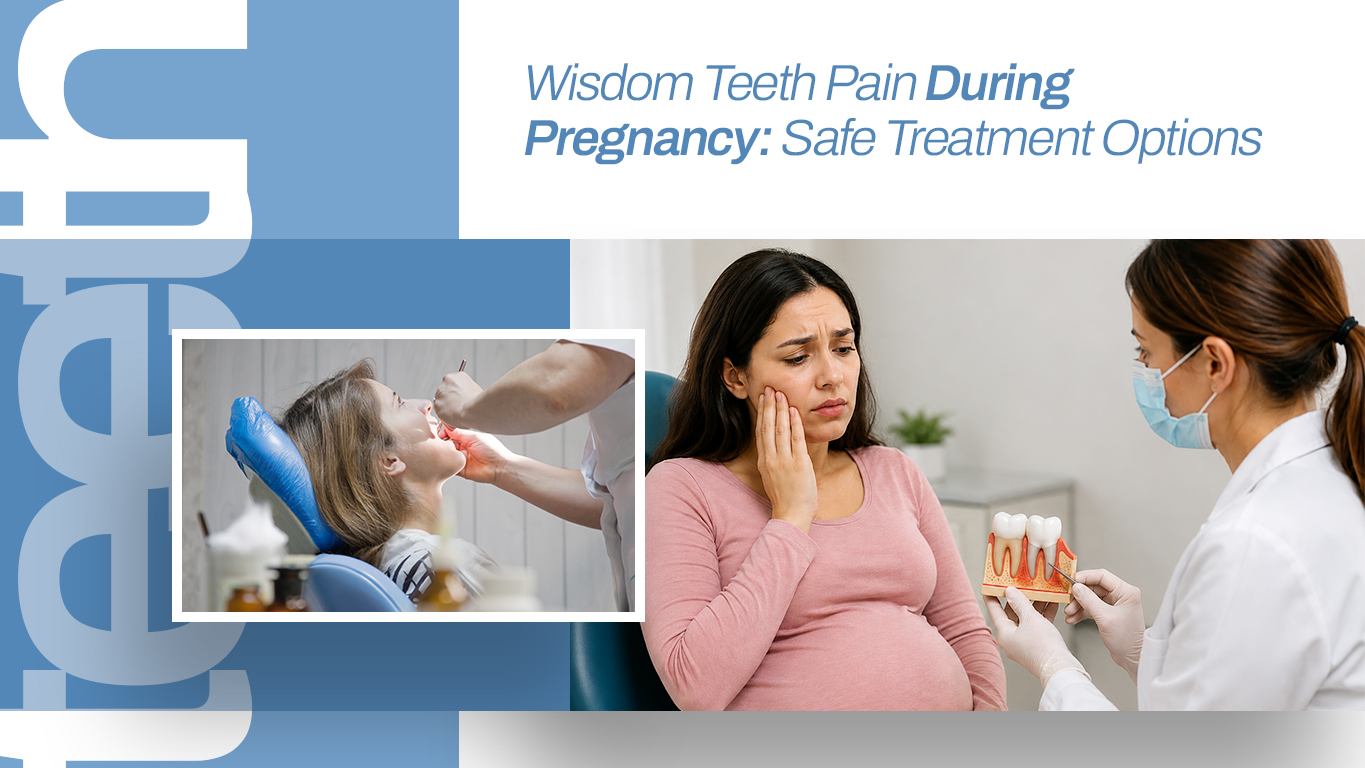
Wisdom Teeth Pain During Pregnancy: Safe Treatment Options
Wisdom teeth pain during pregnancy has a habit of arriving at the worst possible time — usually somewhere in the second trimester, often on a weekend, and always with a layer of worry about whether anything can safely be done about it.
The reassuring answer: yes, quite a lot can be done safely, and untreated dental infection carries more risk to a pregnancy than careful dental treatment does. What changes during pregnancy is the sequencing, the choice of medication, and the timing of anything surgical.
Why do wisdom teeth flare up during pregnancy
It is rarely a coincidence. Several things overlap.
Hormonal changes. Raised progesterone and oestrogen exaggerate the gum response to plaque. Pregnancy gingivitis affects a large proportion of pregnant women, and gums around a partially erupted wisdom tooth are already the hardest area in the mouth to clean.
Pericoronitis. When a wisdom tooth is partly through, a flap of gum sits over it and traps food and bacteria. Inflame that flap, and you get the classic presentation — a swollen, tender pad of gum at the back of the jaw, pain on biting, sometimes a bad taste, sometimes difficulty opening. Pregnancy makes this both more likely and more painful.
Changed habits. Morning sickness means stomach acid across the teeth, more frequent snacking, and — very commonly — brushing right at the back becoming intolerable because it triggers gagging. That back corner is exactly where the wisdom teeth are.
More attention to symptoms. Fair enough. You are paying closer attention to your body than usual.
Can you get your wisdom teeth removed while pregnant?
Yes — but usually only when there is a clear reason to do it now rather than after delivery.
The standard approach in Australia is:
- Urgent and necessary treatment — infection, abscess, uncontrolled pain — proceeds during pregnancy. Leaving an active infection is the higher risk.
- Elective removal — an impacted wisdom tooth that is not causing problems — waits until after the baby arrives.
If extraction is needed, the second trimester (roughly weeks 14 to 27) is the preferred window. The first trimester is the period of organ development and also when nausea is at its worst; the third brings the discomfort of lying back for any length of time, plus a small risk of triggering early labour.
We cover this in more detail in our article on being pregnant with a hurting wisdom tooth.
Is local anaesthetic safe during pregnancy?
Local anaesthetic is considered safe in pregnancy and is the anaesthetic of choice. Lignocaine is well established and widely used. Your dentist may adjust the adrenaline content, and you will be positioned slightly on your left side in later pregnancy to avoid pressure on the major vessels.
What is generally avoided:
- Nitrous oxide — usually avoided, particularly in the first trimester
- IV sedation — normally deferred until after delivery
- General anaesthetic — reserved for genuine emergencies and managed with your obstetrician
So a pregnancy-safe wisdom tooth extraction typically means local anaesthetic only. If you are highly anxious, tell us — there is a lot that can be done with appointment timing, shorter visits, and clear communication.
What about dental X-rays?
A dental X-ray with a lead apron and thyroid collar delivers an extremely small radiation dose, far below the threshold associated with harm to a foetus, and the beam is not aimed anywhere near your abdomen. Where imaging is genuinely needed to treat you safely, it is taken. Where it can reasonably wait, it waits. You should always tell the practice that you are pregnant and how many weeks.
Pain relief: what is safe and what is not
This is where most people go wrong, often with the best intentions.
Generally considered safe — paracetamol, at standard doses, is the first-line analgesic in pregnancy.
Avoid ibuprofen and other NSAIDs, particularly after 20 weeks and definitively in the third trimester, because of effects on the foetal ductus arteriosus and amniotic fluid. Aspirin should not be taken for dental pain unless your doctor has specifically prescribed low-dose aspirin for another reason.
Antibiotics — where a genuine infection exists, several antibiotics, including amoxicillin, are commonly used in pregnancy. Others, notably tetracyclines such as doxycycline, are not.
Always confirm with your GP, obstetrician, midwife, or pharmacist before taking anything, including anything you already have in the cupboard.
Safe relief you can start at home tonight
While you arrange an appointment:
- Warm salt water rinses: half a teaspoon of salt in a cup of warm water, several times a day, especially after meals. Simple and genuinely effective for pericoronitis.
- Cold compress: 15 minutes on, 15 minutes off, against the outside of the cheek.
- Sleeping propped up reduces the throbbing that builds when you lie flat.
- Soft toothbrush and gentle cleaning: at the back, even when it feels awful. A small interdental brush or a child-sized head helps if gagging is the issue.
- Avoid: clove oil applied directly and neat, aspirin held against the gum, and any heat pack over a swollen face.
Our guide to home remedies for wisdom teeth pain has more, though not everything there is appropriate during pregnancy — check with us first.
Infected wisdom tooth symptoms you should not sit on
Call a dentist promptly if you notice:
- Swelling of the cheek, jaw, or under the chin
- A bad taste or discharge from around the tooth
- Difficulty opening your mouth or swallowing
- A sore throat on one side — yes, a wisdom tooth infection can cause a one-sided sore throat as the inflammation tracks into the surrounding tissues
- Fever or feeling generally unwell
- Pain that stops you from sleeping or eating
Facial swelling combined with difficulty swallowing or breathing is an emergency — present to a hospital emergency department, not a dental clinic.
What does treatment usually look like
For most pregnant patients with an angry wisdom tooth, the sequence is:
- Assessment — history, examination, x-ray if clinically necessary
- Settle the infection — irrigation under the gum flap, debridement, sometimes a pregnancy-safe antibiotic
- Pain control — paracetamol, salt rinses, cold compress
- Decision point — if it settles and you are near delivery, we monitor and plan extraction for afterwards. If it recurs or does not settle, we extract, ideally in the second trimester, under local anaesthetic.
Removing the gum flap alone (an operculectomy) is occasionally enough to solve recurrent pericoronitis without touching the tooth.
Frequently asked questions
1. Can wisdom teeth pain harm my baby?
The pain itself does not. An untreated infection can, which is why prompt assessment matters more during pregnancy, not less.
2. Which trimester is safest for extraction?
The second, roughly weeks 14 to 27.
3. Can I have the extraction under sedation?
Sedation and general anaesthesia are usually deferred until after delivery. Local anaesthetic is the pregnancy-safe option.
4. Can I take ibuprofen for the pain?
No — avoid NSAIDs in pregnancy unless your doctor has specifically told you otherwise. Paracetamol is the usual choice.
5. Can wisdom teeth cause a sore throat?
Yes. An infected lower wisdom tooth commonly produces one-sided throat soreness and pain on swallowing.
6. Should I just wait it out until after the birth?
If it is settled and comfortable, often yes. If it keeps flaring, waiting typically means several more painful episodes at a time when you least want them, plus a newborn to manage afterwards.
Talk to us before it flares again
If you are pregnant and your wisdom tooth is playing up, do not wait to see how bad it gets. Tell us how many weeks you are when you book, and we will plan around it.
Springvale Dental Clinic — (03) 9546 0011 ·
Carrum Downs Dental Group — (03) 9782 1200 ·
Bayswater Dentist — (03) 9069 3100
Open 9am–5pm, seven days. See our FAQ or review extraction costs.